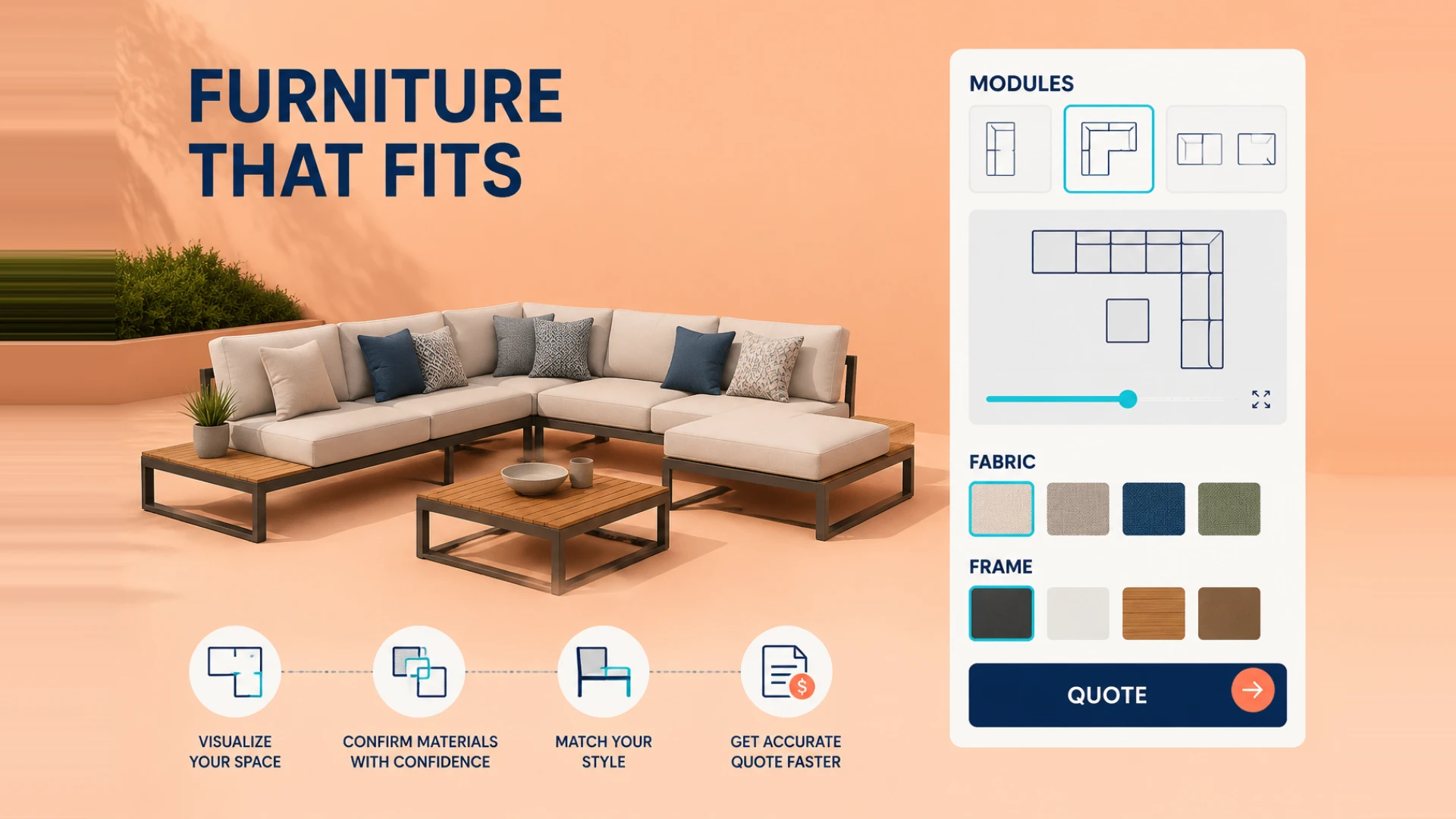
Furniture websites have a very specific conversion problem: users may like what they see, but they still hesitate for too long before making a decision.
That hesitation is rarely about lack of interest. It is usually about uncertainty.
Furniture buyers need to understand scale, finish, material quality, layout fit, and styling balance. A few product images can help. Video can help a little more. But once the product becomes customizable or visually sensitive, the buyer often reaches a point where static content is no longer enough.
That is exactly why furniture websites are such a strong match for 3D configurators.
What Is a 3D Configurator for a Furniture Website?
A 3D configurator for a furniture website lets buyers compare finishes, sizes, modules and accessories on the complete product rather than through separate image samples. The final configuration can be connected to a quote request, CRM workflow, Shopify cart or internal sales process.
For manufacturers and custom cabinetry brands, our 3D furniture configurator solution covers materials, dimensions, configuration rules, quote capture and product-data integration.
The Hardest Part Is Not Presentation. It Is Confirmation.
Furniture is not just about taste. It is about confidence.
Most users are trying to answer practical questions before they commit:
- Does this finish work with the look I want?
- Will another material feel more premium?
- Is the size right for my actual space?
- Do these doors, handles, legs, or surfaces work together?
- What will this exact combination cost?
If the website cannot help answer those questions visually and clearly, the decision slows down fast.
Why 3D Configurators Work Especially Well in Furniture
Material Choice Matters Too Much for Static Images
Furniture buyers are highly sensitive to surface quality. Wood grain, matte lacquer, brushed metal, clear glass, fabric, leather - those choices completely change the perceived value of the product.
A 3D configurator lets users compare finishes in the same visual environment instead of jumping between inconsistent photo sets.
Size and Proportion Need to Be Seen
This is especially true in wardrobes, cabinets, shelving, kitchen systems, and modular furniture.
The moment the user can change size and immediately see the effect, the product becomes easier to understand and easier to buy.
That is one of the biggest reasons static product pages struggle in this category.
Pricing Is Often Tied to Configuration
Furniture sales slow down badly when customers need to wait for manual quote clarification after every change.
If material, size, and component changes can update price logic directly inside the configurator, the buying flow becomes much more efficient. The user is no longer reacting to an estimated concept. They are getting closer to a real purchase-ready configuration.
A Good Furniture Configurator Needs More Than Nice 3D
A lot of furniture projects look like configurators but behave more like visual demos.
For a furniture website, the configurator needs to solve things like:
- option dependencies
- size-based structure or pricing changes
- cart or inquiry handoff
- mobile performance stability
- readable order or quote output for internal teams
Without that layer, the project may still look impressive, but it will not do enough to improve conversion efficiency.
How Furniture Configurations Reach a Quote or Cart
The website should keep the customer's visual choices and commercial data together. A useful furniture configuration flow can:
- map materials, dimensions and modules to valid product options;
- calculate a price or prepare a structured quote request;
- pass the selected configuration to Shopify, CRM, ERP or a sales team.
This gives buyers a clearer next step and reduces the manual work required to recreate a configuration after the enquiry arrives.
Which Furniture Brands Benefit Most
Not every furniture brand needs a configurator first.
If you mainly sell standard ready-to-ship SKUs with limited variation, other growth work may matter more.
But 3D configurators usually become much more valuable if you sell:
- custom furniture
- wardrobes and cabinetry
- modular systems
- higher-ticket products with real finish variation
- products where the website is expected to do more selling work on its own
In those cases, the configurator helps the website take over part of the explanation and qualification process that would otherwise sit entirely with sales staff.
Furniture Is One of the Best Categories for a Full Display-to-Decision Flow
That is one more reason this category works so well with Web3D.
Furniture websites can use:
- 3D product display to explain detail and craftsmanship
- a 3D configurator to handle finish, size, and option choices
- cart or inquiry flow to capture serious intent
That end-to-end path is far more powerful than simply making the product page "look more advanced."
For furniture manufacturers and custom cabinetry brands that need this workflow built into a commercial website, see our 3D furniture configurator solution. The solution covers materials, dimensions, modular rules, quote capture and product-data integration.
If you want the more specific cabinetry and custom furniture angle, continue with how 3D furniture configurators improve cabinet sales.
And if you want to place furniture within the broader e-commerce strategy question, Why More E-commerce Brands Need a 3D Product Configurator is the right follow-up. If you are already moving toward implementation details, go next to Building a Product Configurator with Three.js.