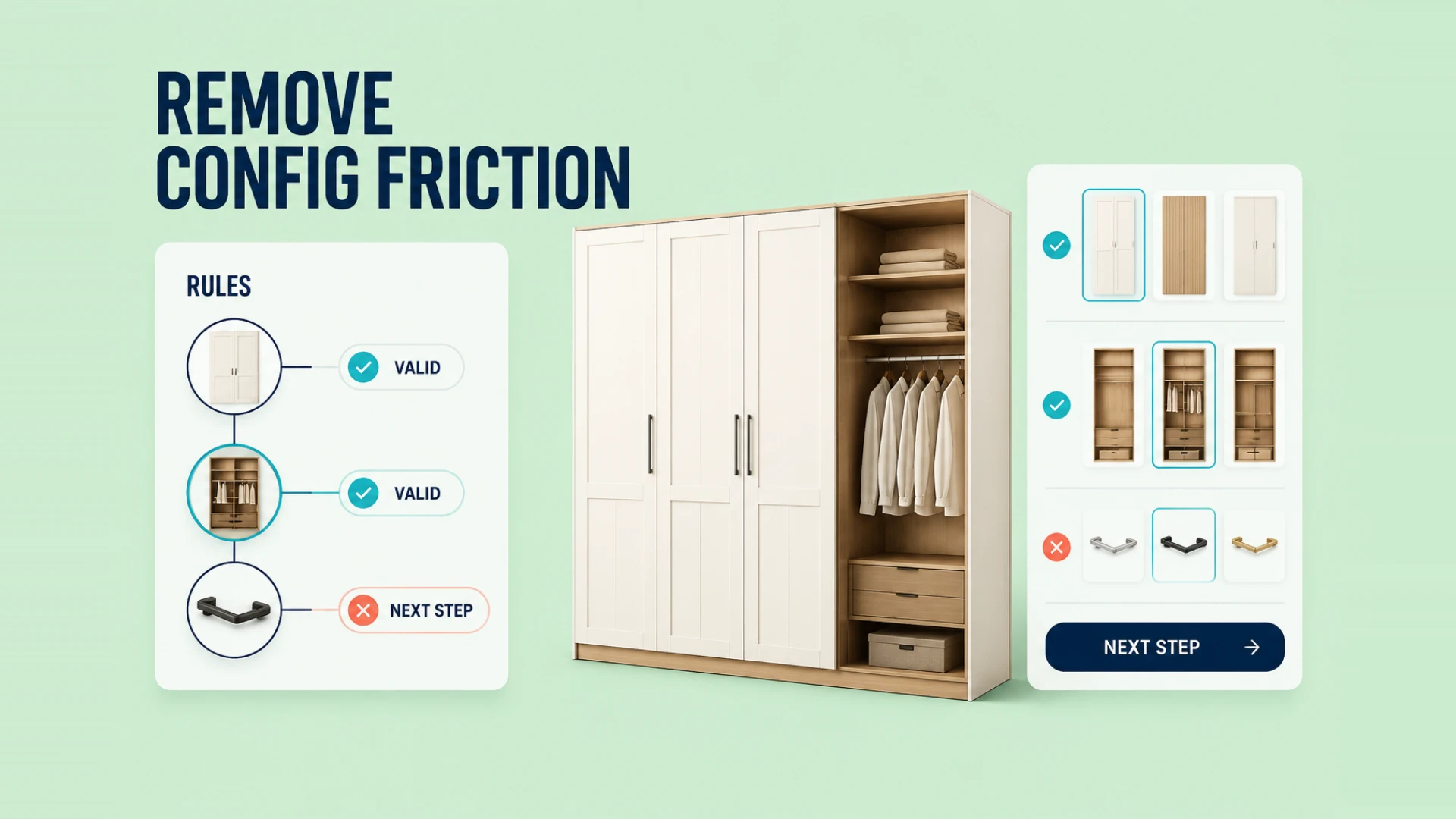
I see too many e-commerce brands falling into the exact same trap. They spend months rendering gorgeous 3D models, throw them onto a Shopify site, and expect conversions to skyrocket overnight. Instead? Their site loading speed tanks, mobile users bounce within three seconds, and the "interactive" customizer feels more like a laggy 2005 flash game than a modern shopping experience.
Let’s be real for a second. Building a functioning product 3d configurator isn't just about making things look pretty in Blender. If you are dealing with a 3d clothing configurator or a 3d furniture configurator, you are fighting two completely different technical beasts.
The Most Common Conversion Problems in Apparel and Furniture
The Fabric Nightmare: Why Apparel Customization Stalls
Let's look at a custom apparel product configurator. If someone wants to customize a hoodie or a sports jersey, they expect to see realistic fabric creases, seam stitches, and material textures that actually react to lighting.
But here is where most dev teams mess up: they try to upload raw, unoptimized high-poly meshes directly to the browser. The result? A massive 80MB file that chokes the user's smartphone. In our real-world projects at WESHOW3D, we’ve learned the hard way that you absolutely must bake fabric folds into normal maps. You need low-poly meshes paired with high-detail texture maps, or the whole experience falls apart before the shopper even gets interested. If the fabric doesn't drape naturally or feel tactile, nobody is clicking "Add to Cart."
Why Real Product Experience Is Hard to Recreate Online
The Precision Trap in Furniture
Furniture is a whole different headache. When people use a 3d furniture configurator, they aren't just playing with colors—they are checking if that modular sofa actually fits into their specific living room dimensions.
This means your Web3D setup needs to handle complex parametric scaling without stretching the wood grain texture or distorting the leather patterns. If a user scales a table from 1.5 meters to 2.2 meters, and the wood texture suddenly looks stretched out like a bad Photoshop edit, you’ve lost all consumer trust. At WESHOW3D, we fix this by writing custom fragment shaders that dynamically tile textures based on real-world dimensions, ensuring the material looks flawless no matter the configuration.
What a High-Converting Configurator Actually Needs
Seamless Backend Integration: The Missing Link
Here is another massive pain point: standalone 3D tools that don't talk to your ERP or e-commerce backend. What happens when a customer spends twenty minutes designing their dream custom jacket, hits buy, and the system fails to generate a proper manufacturing bill of materials or accurate pricing? It’s a total operational nightmare.
A real production-ready configurator must deeply integrate with platforms like Shopify. When a user swaps a fabric or adds a premium zipper, the price needs to update instantly, and the final checkout cart must capture the exact configuration data for the production line.
Going Beyond the Configurator Itself
Beyond the Configurator: What WESHOW3D Really Does
Look, building these high-performance product 3d configurators is a major part of what we do, but it’s definitely not our entire world. At WESHOW3D (www.weshow3d.com), we treat Web3D as a holistic ecosystem.
Depending on what your business actually needs, we don't just stop at e-commerce customizers. Our team handles everything from interactive 3D product showcases with full exploded views and hotspot annotations to deep industrial 3D digital twins that connect live sensor data for real-time equipment monitoring. If you need something outside the browser, we also develop native AR/VR applications using Unity and Unreal Engine, and we are heavily diving into spatial computing apps for Apple Vision Pro. From high-end 3D animation rendering for marketing videos to offline multi-language interactive touchscreens for offline exhibitions, we build the heavy-duty tech that keeps users hooked.
Don't just slap a basic 3D plugin on your site and hope for the best. Optimize your assets, bridge the gap between your 3D frontend and your backend data, and build something that actually scales.