When brands first look at interactive 3D product display, one of the most common reactions is: does this really help conversion, or does it just make the website look better?
In practice, its biggest value usually is not visual novelty. It is that interactive 3D changes how quickly users understand a product and how confidently they trust what they are seeing.
Those two things matter a lot in e-commerce.
A Lot of Conversions Are Lost to Uncertainty
Many users do not leave because they have no interest. They leave because they still are not sure.
They are trying to figure out:
- what the product really looks like
- whether the material quality feels right
- whether certain details justify the price
- whether the gallery is showing the product honestly or selectively
If those questions remain unresolved, the buyer often keeps comparing, postpones the decision, or drops off.
Why Interactive 3D Builds More Buying Confidence
Users Can Verify Details Themselves
Normal product photography gives the user the brand's view of the product.
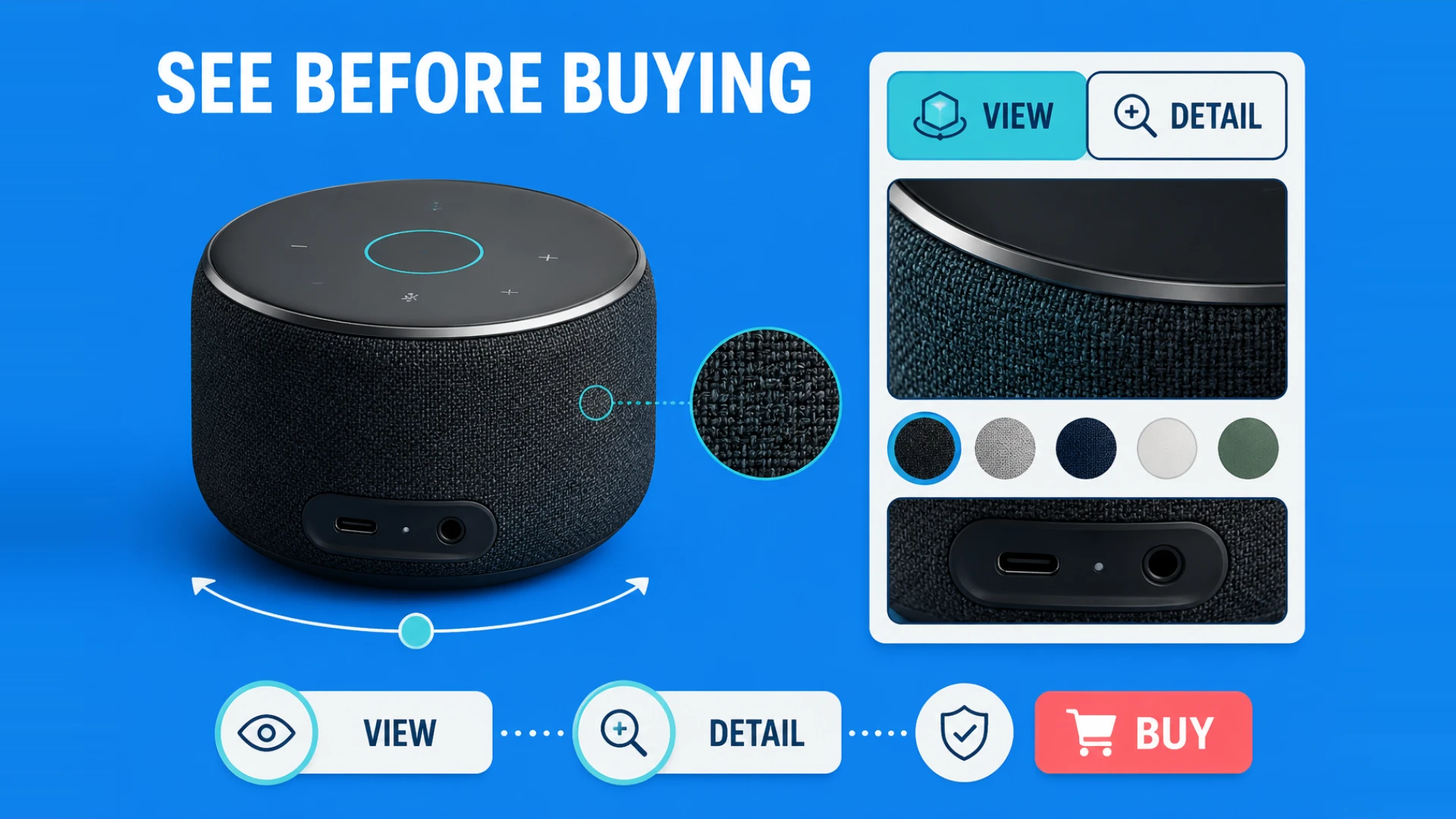
Interactive 3D gives some of that control back to the buyer. They can rotate, zoom, inspect, and pause exactly where they want. That shift alone improves the feeling of "I understand this now."
Materials and Structure Become Easier to Read
This matters most for higher-value products.
Furniture, equipment, components, premium consumer goods, and other detail-sensitive items often need more than a flat gallery. Interactive 3D makes structure, proportion, and material response easier to judge.
Time on Page Usually Improves
This is one of the simplest but most useful effects.
If users only scroll through static images, they may leave quickly. If they start manipulating a model, they are now participating. That increased engagement often leads to longer dwell time and better product understanding.
Which Products Benefit Most
Interactive 3D product display tends to work especially well for:
- higher-ticket products
- products with important structural detail
- products where material choice strongly affects buying decisions
- DTC or independent brand websites that need stronger trust signals
It is less urgent for low-cost impulse purchases. But for more complex or more expensive products, it can become a meaningful performance layer.
3D Display Is Not the Same as a Configurator
This is an important distinction.
A lot of brands do not need to jump directly into a full product configurator. For many websites, interactive 3D display is already enough to solve the first major problem: the product page does not explain the product clearly enough.
Once that layer performs well, the next step can be configuration, pricing, cart logic, or inquiry flow.
If you are deciding when display should evolve into configuration, our article on why more e-commerce brands need a 3D product configurator is the right next read.
So Why Does It Affect Conversion?
At its core, interactive 3D improves conversion because it improves four things:
- product understanding
- material confidence
- resistance to misleading visual assumptions
- willingness to keep exploring the page
That is why the impact is rarely just about "looking advanced." It is about helping the buyer trust the product faster.
If you are trying to decide whether interactive display is enough or whether the site should move into full configuration, the best next read is Why More E-commerce Brands Need a 3D Product Configurator. And for Shopify teams specifically, When Should a Shopify Store Invest in Web3D? helps frame the timing question.