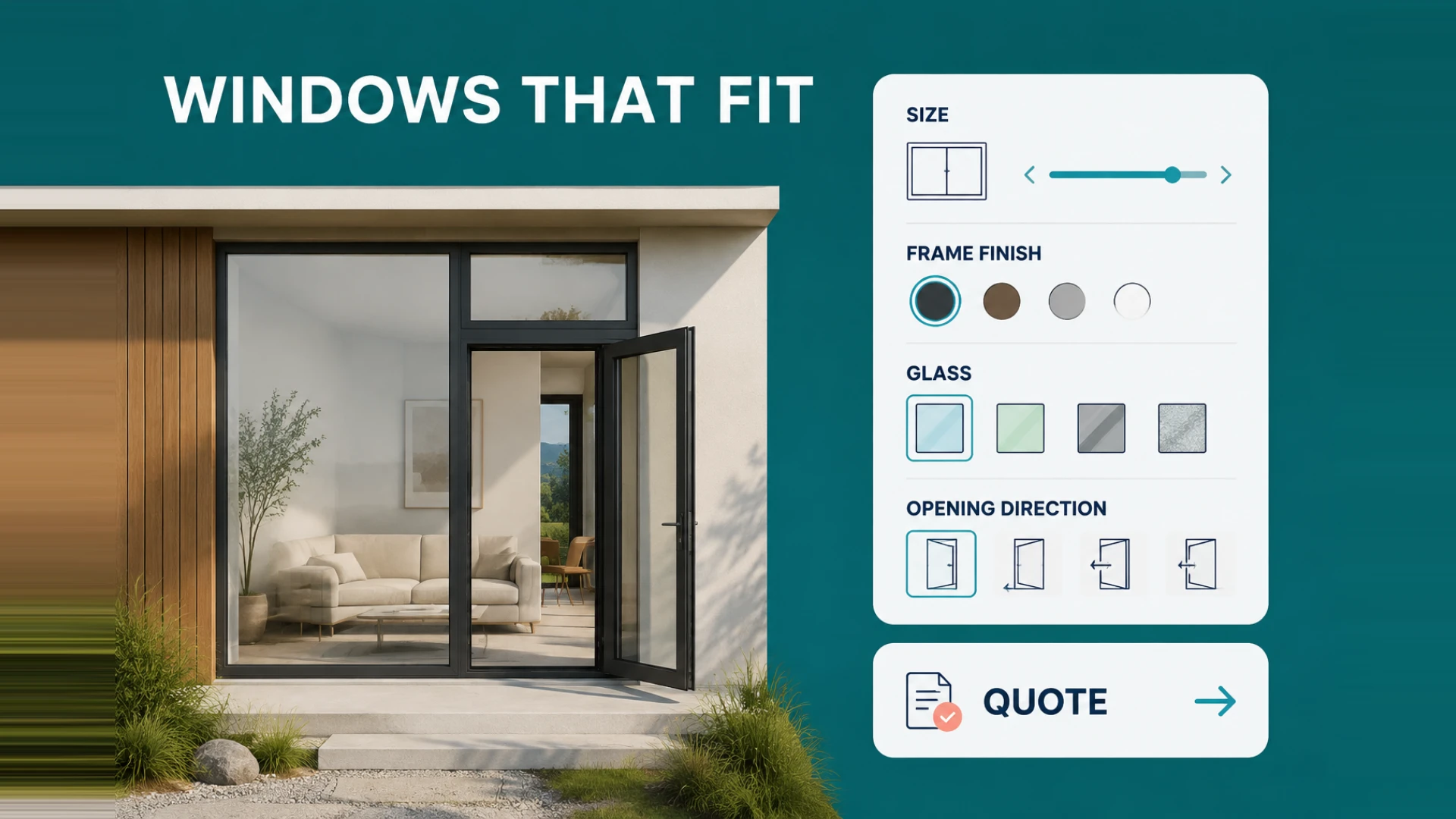
Windows and doors may look like a traditional manufacturing category, but the buying process actually contains a very strong digital opportunity.
The problem is rarely lack of demand. The real problem is that these products are hard to explain clearly at the decision stage.
Where the Friction Usually Comes From
Whether the project involves residential systems, premium home renovation products, or larger specification work, the same issues appear again and again:
- dimensions are hard to visualize
- opening methods are hard to explain
- frame colors and glass options need repeated comparison
- hardware and grille details are difficult to judge from flat images
- pricing often depends on structural choices
If all of that has to be explained through PDFs, gallery images, and repeated manual back-and-forth, the process slows down quickly.
Why This Category Fits 3D Configurators So Well
Size and Structure Need Visual Explanation
Customers are not just buying a style. They are trying to understand an actual build result.
Once dimensions and structure can be shown visually in 3D, the communication process becomes much clearer.
Finish and Layout Choices Need Side-by-Side Clarity
It is difficult for buyers to understand the difference between narrow champagne frames with grey glass and darker structural systems from words alone.
A 3D configurator makes those comparisons visible immediately.
Quoting Becomes Easier to Align with the Design
One of the slowest parts of window and door sales is that the design conversation and the quoting conversation often happen separately.
If size, structure, accessories, and price can stay more closely linked, the website becomes much more than a static catalog.
Which Brands Benefit Most
Not every brand needs a configurator first.
But this approach becomes especially useful for brands that:
- sell premium or system windows and doors
- need to explain multiple opening structures or frame systems
- rely on websites for lead generation
- want to reduce repetitive sales explanations
- want the website to qualify intent, not just display samples
The Key Is Not Just Visual Quality. It Is Rule Clarity.
This is where many projects go wrong.
A window or door configurator is not just a 3D viewer. It also needs to manage rules such as:
- which structures fit which dimensions
- which accessories only work with specific opening systems
- which finish choices affect pricing
- which combinations are not realistic for production
If those rules are not handled properly, the result may still look polished while being commercially unreliable.
The Biggest Value Is Reducing Early-Stage Friction
In this category, the most practical benefit is not simply "better user experience." It is reducing the friction that slows down real sales work:
- fewer repeated explanations
- clearer expectation alignment
- better-quality inquiries
- easier understanding of complex combinations
That is why custom windows and doors are such a good fit for 3D configurators. The technology works here because the category naturally benefits from turning complex discussions into visible choices.
If you want to zoom out from windows and doors to the broader question of why configurable, higher-ticket products benefit from this model, continue with Why More E-commerce Brands Need a 3D Product Configurator. If budget and rollout threshold matter more right now, go next to Shopify 3D Configurator Pricing Explained.