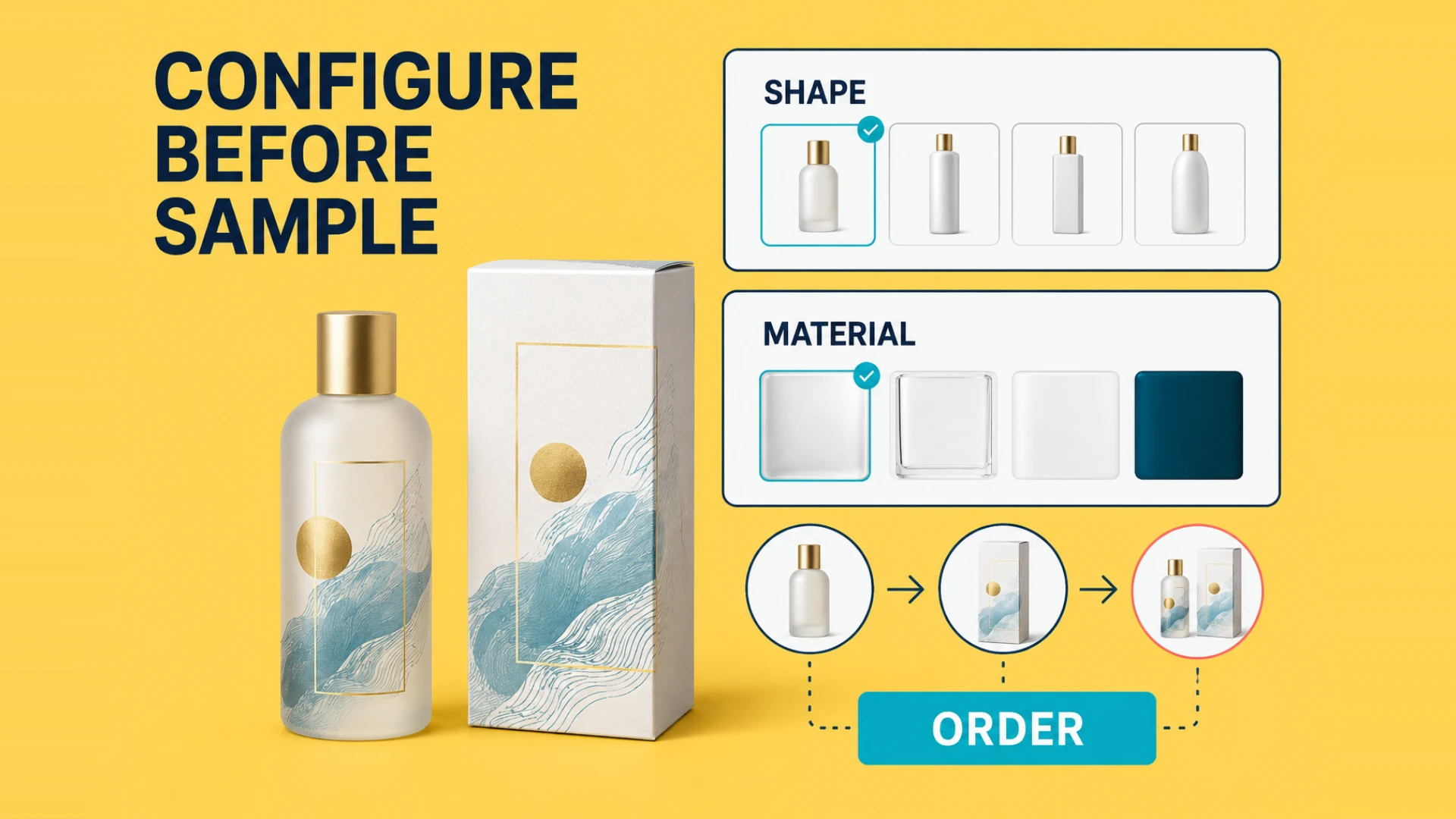
Packaging projects often move slower than they should because too much of the decision process still depends on physical samples.
That creates a familiar pattern: initial concept, visual mockup, revision round, sample production, shipping, another revision, another delay. For suppliers, that means time and sampling cost. For buyers, it means uncertainty and slow internal approval.
This is exactly where a 3D packaging configurator becomes useful. Not because it replaces all physical sampling, but because it helps both sides resolve more of the decision-making before expensive sample rounds begin.
Why Traditional Packaging Approval Takes So Long
A typical workflow often looks like this:
- the client shares an initial concept
- the design team creates flat visuals or renderings
- both sides begin revising
- samples are produced
- samples are shipped
- feedback restarts the loop
The slowdown usually comes from details that are hard to confirm in flat artwork:
- whether the structure feels right
- whether materials change the perceived quality
- whether foil, embossing, matte, or gloss finish actually match expectations
- whether bottles, closures, trays, and boxes work together visually
That is why projects stretch out even when nobody is intentionally delaying them.
What a 3D Packaging Configurator Solves Earlier
It Clarifies Structural Relationships
One of the biggest issues in packaging sales is that clients do not fully understand the structure early enough.
With a 3D configurator, bottles, closures, boxes, inserts, and material options can sit in the same real-time view. That alone makes the project easier to discuss.
It Makes Finish Differences Easier to Judge
Foil, embossing, matte coatings, gloss, frosted surfaces, and other finish choices are hard to judge in static flat artwork.
A solid Web3D presentation makes those differences much more visible, which helps clients make direction decisions sooner.
It Pulls Intent Forward
This is the real value.
The client no longer has to wait for a physical sample to understand what they are aiming for. The configurator helps both sides remove a lot of avoidable uncertainty before sampling even begins.
Which Packaging Scenarios Benefit Most
This approach tends to work especially well in:
- cosmetics and personal care packaging
- wine, liquor, and premium gift packaging
- custom box structures with multiple layout choices
- export packaging and high-value branded packaging programs
The shared pattern is simple: every round of physical validation costs real time and money.
Good Implementation Needs More Than a Nice 3D Viewer
For a packaging configurator to help the business, it needs more than visual polish.
It should also handle:
- accurate structure logic
- believable material and finish representation
- clean handoff into quote or inquiry flow
- stable behavior on both mobile and desktop
- the ability to expand with more SKUs and finish options later
Without that, the project may still look impressive, but it will not help enough during real commercial use.
Where It Delivers the Clearest Value
If you want the shortest practical answer, it is this:
- it shortens front-end confirmation cycles
- it reduces wasted sampling and revision rounds
That alone can make it a strong business case for packaging suppliers and brands.
And if you want more specific vertical examples, continue with our articles on cosmetics packaging configurators and wine packaging configurators.
If you are still weighing the investment side, the next useful article is Shopify 3D Configurator Pricing Explained. It helps connect packaging workflow value to actual project-budget thinking.
And if you want to place packaging inside the bigger e-commerce strategy discussion, Why More E-commerce Brands Need a 3D Product Configurator is the right companion article. Packaging is one of those categories where display, configuration, and inquiry flow naturally belong together.