Selling custom truck caps online used to be a complete nightmare for customer support.
Think about the traditional workflow. A customer lands on your site wanting a topper for their Ford F-150. They pick a base model, choose a cab height, select front sliding windows, decide between carpet lining or bare fiberglass, pick roof racks, and then pray that the paint code matches their truck's exact factory tone.
What happens next? Endless email back-and-forths, manual quote calculations, miscommunications over window options, and—worst of all—costly returns because "it didn’t look like what I imagined on my truck."
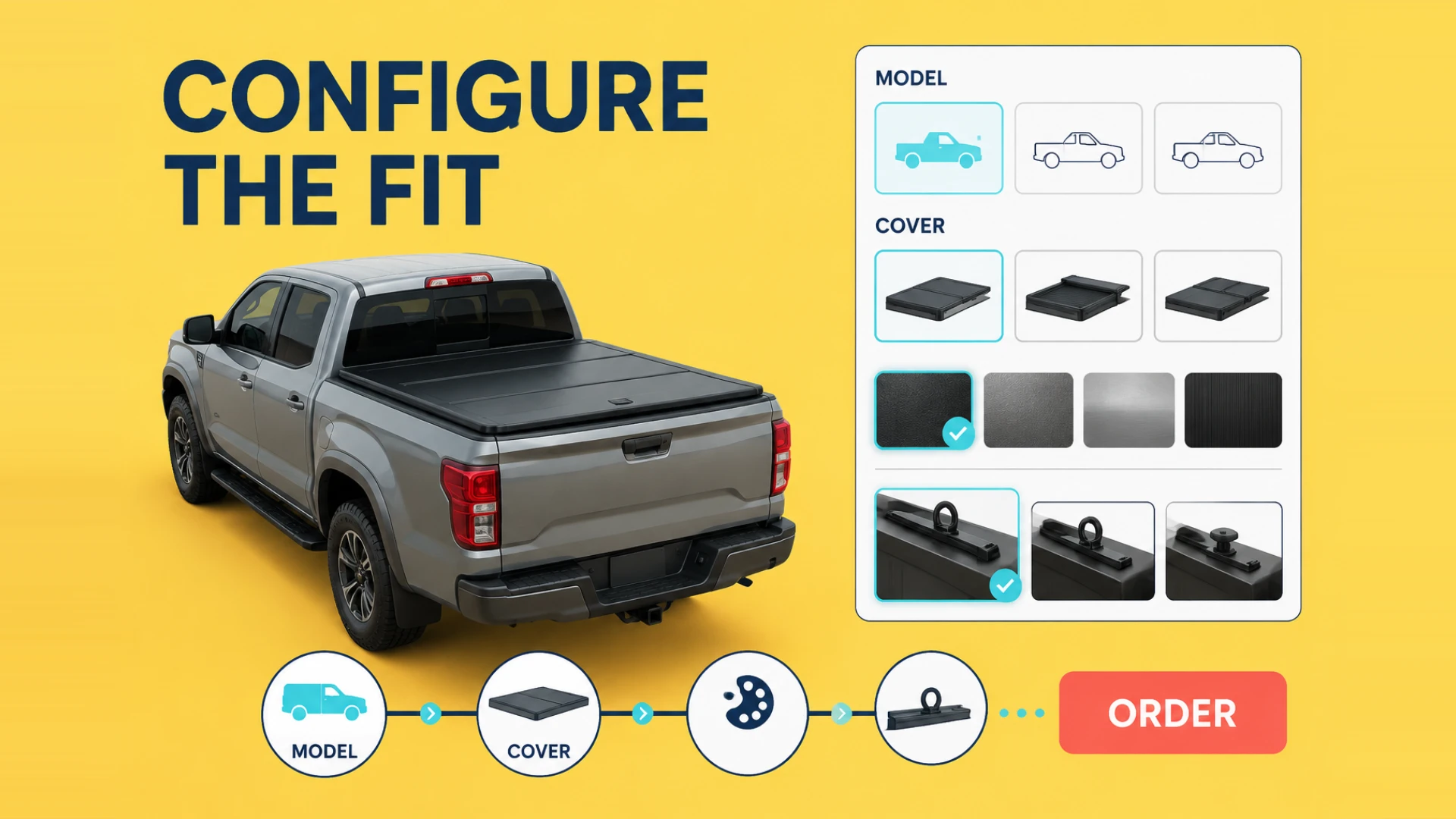
This is why aftermarket auto accessory brands may evaluate a dedicated Truck Cap 3D Configurator when customers need to compare vehicle fit, options, and pricing online.
The Most Direct Business Value of This Configurator
The Real-World Impact of a Truck Cap 3D Configurator
When a buyer interacts with a Product 3D Configurator, they can compare vehicle fit, dimensions and options in the browser instead of relying only on static renders or generic specification tables.
Take inspiration from industry setups like RealTruck’s CapBuilder. When we engineer a custom Web3D solution for truck caps, we take that interactive experience even further:
- Real-time OEM Match & Visual Stacking: Customers can select the agreed truck year, make, model, bed length and paint code, then review how the cap aligns with the prepared vehicle model. Fit accuracy depends on the source data and validation scope.
- Exploded Structural Views & Animated Hotspots: Want to show off heavy-duty locking handles, integrated roof rack weight capacities, or interior LED lighting wiring? Users can trigger dynamic exploded views or click hotspots to see how parts actually lock into place.
- Shopify & Shopping Cart Integration: When inventory, pricing rules and interfaces are defined, the configurator can read agreed data, update line-item pricing and pass build metadata into Shopify or an enquiry flow.
The Hard Technical Problems Behind Real Deployment
Beyond Static Renders: Technical Hurdles We Solved
A lot of shop owners come to us asking: "Won't heavy 3D CAD files slow down my ecommerce store's loading speed?"
It is a valid concern. Loading and interaction performance should be measured against the agreed model, network and target devices rather than a universal time threshold.
At WESHOW3D, we plan lightweight mesh processing and browser-native WebGL/WebXR loading around the model, materials, and target devices, then validate loading and interaction on those devices.
Capabilities That Extend Beyond One Product Category
We Do Much More Than Just Truck Accessories
While a truck cap 3d configurator can support fit and option discussions, it is one part of what we do here at WESHOW3D.
As a Web3D software engineering studio, we build interactive solutions across multiple industries according to the agreed scope:
- E-Commerce Product 3D Display: 360-degree rotation, exploded structure views, audio/video hotspot integration, and virtual product manuals for complex hardgoods.
- Interactive 3D Applications & Offline Touchscreens: Custom 3D software for trade show booths, offline Android/Windows kiosks, mini-programs, and interactive showroom displays.
- 3D Digital Twin Systems: Linking real-time physical sensor data into interactive 3D virtual models for remote industrial monitoring and predictive maintenance.
- VR/AR & Spatial Computing Development: WebXR browser solutions alongside native Unity, Unreal Engine, and Apple Vision Pro apps for next-gen immersive experiences.
- High-End 3D Animation & Rendering: Studio-grade 3D modeling, commercial product videos, key visual renders, and CGI marketing assets.
If your e-commerce store relies on static photos and needs clearer product option discussions, contact WESHOW3D to review a suitable 3D display or configurator scope.